
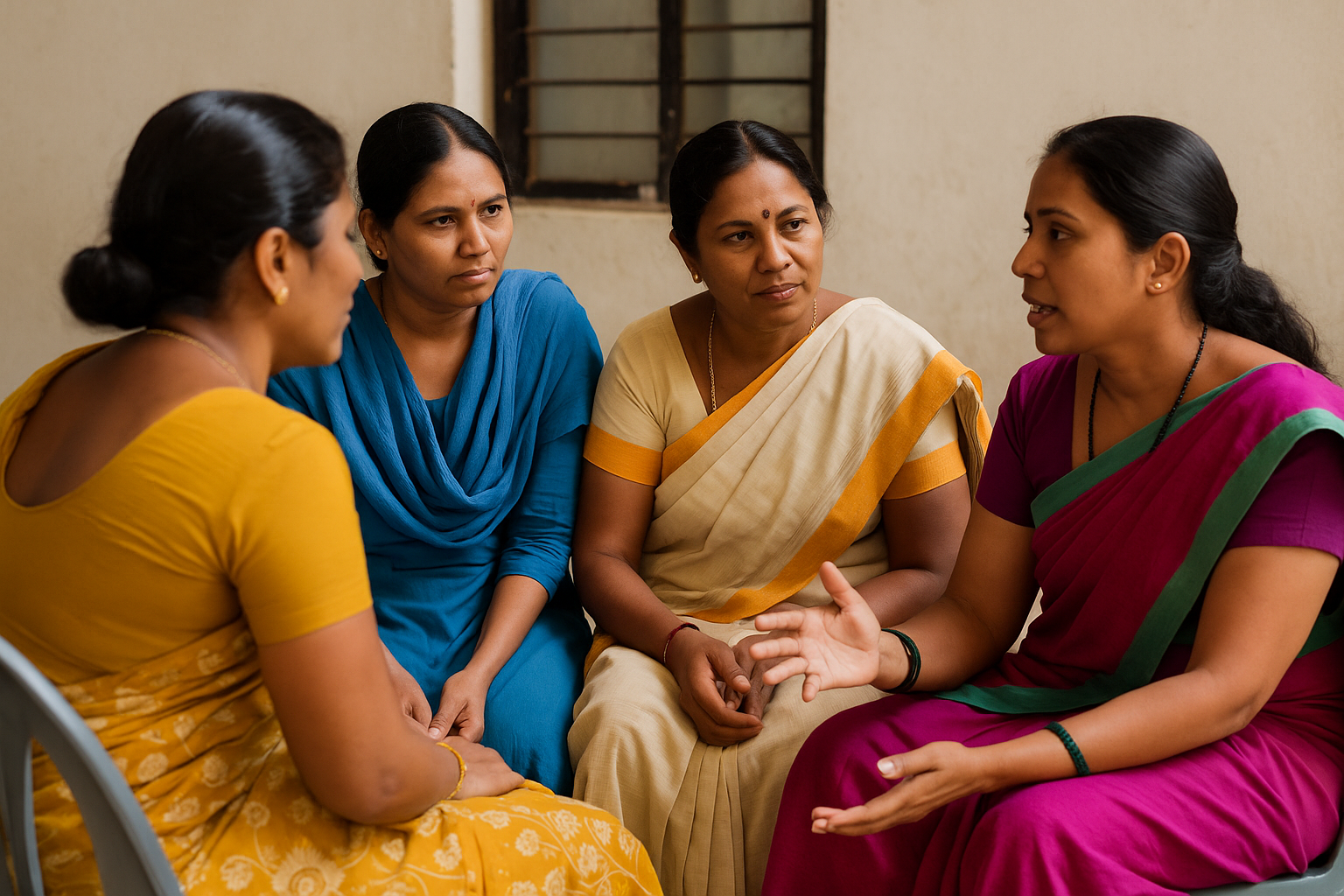
🌟 Building Leadership Among Women in Sex Work
Swecha Mahila Sangam — Leadership & Rights Unit supports women in sex work to organise, lead community initiatives, claim rights, and influence policy that affects their lives. Our approach centres on peer leadership, safety, economic agency, legal empowerment and reducing stigma — so that women can speak for themselves, take collective action and shape services that truly meet their needs.
🎯 Program Objectives
- 🤝 Build strong peer-led groups and democratically elected leadership structures
- 🗣️ Strengthen advocacy skills so sex worker leaders can engage with authorities and service providers
- 🛡️ Improve safety, crisis response and collective protection mechanisms
- 📈 Create economic empowerment pathways and alternatives where desired
- 📚 Reduce stigma through community outreach, public messaging and ally-building
📘 Core Components
- 👥 Peer Leadership Training — governance, meeting facilitation and conflict resolution
- 📢 Advocacy & Rights Education — legal rights, police engagement, access to welfare schemes
- 🧑⚖️ Paralegal & Legal Aid Linkages — support for rights violations, arrests, and documentation
- 🛠️ Safety & Crisis Response — hotlines, rapid accompaniment, safety committees and safe spaces
- 💼 Livelihood Diversification Support — voluntary upskilling, micro-enterprise coaching and SHG linkages
- 🩺 Health & Well-being Linkages — targeted sexual and reproductive health, mental health and harm reduction
👩🏫 Leadership Capacity Building
Trainings use practical, rights-based and participatory methods: role-plays for negotiating with authorities, public speaking practice, documentation skills, budgeting and transparency for group funds, and mentoring by experienced community leaders. Emphasis is placed on inclusive leadership — ensuring younger, older, trans and marginalized women are represented.
🤝 Collective Organising & Governance
- 🔸 Formation of peer groups, committees and rotating leadership roles
- 🔸 Democratic decision-making processes and simple constitutions/bylaws
- 🔸 Financial management training and transparent bookkeeping for group funds
- 🔸 Regular leadership retreats and peer-to-peer exchange visits
🛡️ Safety, Protection & Crisis Support
- 📞 Community-run helpline and rapid accompaniment to police, courts or hospitals
- 👥 Safety mapping, buddy systems and night-watch rotas for high-risk areas
- 🧭 Legal support for arbitrary arrests, extortion, violence and access to entitlements
- 🫶 Trauma-informed psychosocial counselling and peer support groups
📣 Advocacy & Public Engagement
- 🧾 Documenting rights violations and producing community evidence briefs for authorities
- 🏛️ Facilitating dialogues with police, health departments and local governance bodies
- 🎭 Community campaigns to reduce stigma — theatre, radio spots, and local media engagement
- 🤝 Building alliances with women's groups, CBOs and human rights organisations
💼 Economic Empowerment (Voluntary & Contextual)
Support is voluntary and respects autonomy. Options include business-skills training, micro-grants for group enterprises, market linkages for products and services, and access to savings groups (SHGs). Any livelihood alternatives are offered without coercion and with realistic income expectations and market assessments.
📋 Monitoring & Impact Indicators
- 📈 Number of active peer groups and elected leaders
- 🗳️ Participation rates of marginalised sub-groups in leadership roles
- 🛡️ Incidents of violence reported and resolved with legal accompaniment
- 🏥 Uptake of targeted health & psychosocial services
- 💬 Changes in community attitudes (measured by outreach feedback)
🔒 Ethical Principles & Safeguards
- 🔐 Confidentiality and informed consent in all activities and data collection
- 🫶 Non-judgmental, client-centred and trauma-informed approaches
- ⚖️ No coercion: respect for choices about work, disclosure and participation
- 🤝 Accountability to the community: grievance mechanisms and transparent reporting
🗣️ Community Voices
"Being part of the leadership committee changed how we negotiate for safety and services — we're no longer invisible."
– Peer Leader
📞 How to Join / Partner
Location: Swecha Mahila Sangam (Leadership & Rights Unit)
Phone / WhatsApp: +91 863 928 2611
Email: support@swetchamahilasangam.org
Next step: Share your community area, estimated number of women, and priority needs (safety, health, advocacy, or livelihoods) — our team will propose a participatory plan and leadership training schedule.
Lead. Protect. Advocate — Women Leading Change.
Swecha Mahila Sangam — Building Leadership Among Women in Sex Work
Recent Donations
Every campaign starts with one donation.
Be the one to make it happen!
Top Donors
No top donors listed yet.
Be one of the first to make an impact!