
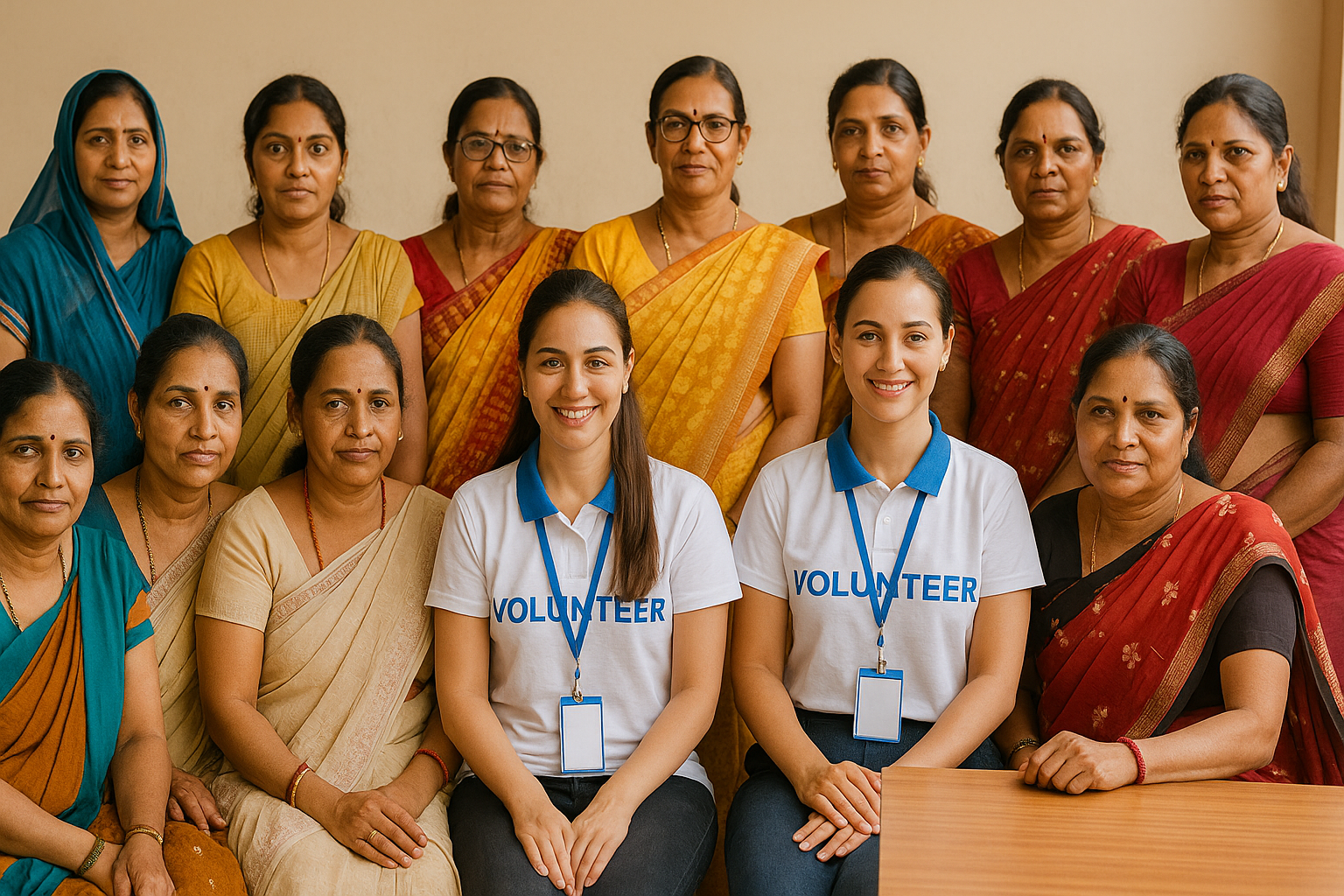
🤝 Strengthening Partnerships for Change
Swecha Mahila Sangam — Partnership & Collaboration Unit builds strategic alliances with government agencies, NGOs, community groups, donors and private sector partners to scale impact, strengthen service delivery, and sustain community-led development. Our partnership approach focuses on equitable collaboration, shared goals, mutual accountability and practical coordination to translate resources into measurable outcomes for women and marginalized communities.
🎯 Partnership Objectives
- 🔗 Forge multi-stakeholder alliances to expand reach and improve service quality
- 📈 Leverage complementary strengths — technical expertise, funding, policy influence and grassroots presence
- 🤝 Build sustainable, accountable relationships that prioritise community voice and leadership
- 🧭 Align programs with government schemes and donor frameworks for scale and continuity
- 🔍 Promote evidence-based approaches and shared learning across partners
📘 Types of Partnerships
- 🏛️ Government partnerships — health, education, social protection and local governance
- 🫂 Civil society collaborations — NGOs, CBOs and community groups for joint programming
- 💼 Private sector & CSR — market linkages, skills training, supply-chain partnerships and funding support
- 🎓 Academic & research — evaluations, action-research and capacity building
- 🌐 Donor & philanthropic — program grants, impact investment and co-financing models
🛠️ Partnership Model & Principles
Our partnership model is guided by clear principles: co-creation with communities, transparent governance, defined roles and responsibilities, measurable results, and adaptive learning. We use memorandum of understanding (MoU) frameworks, joint workplans, pooled resources where appropriate, and regular review meetings to ensure alignment and accountability.
🔁 Stages of Partnership Development
- Scoping & stakeholder mapping — identify complementary partners and gaps
- Co-design & joint planning — set shared objectives, roles and indicators
- Agreement & resource mobilisation — MoU, budgets, and risk-sharing arrangements
- Implementation & coordination — joint steering committees, field coordination and shared tools
- Monitoring, evaluation & learning — data sharing, impact reviews and adaptive course-corrections
- Sustainability planning — handover strategies, local ownership and scaling pathways
📋 Governance, Risk & Accountability
- ✅ Clear governance structures — steering committee, technical working groups and community advisory panels
- 🛡️ Risk assessment & mitigation plans — financial, operational and reputational risks
- 📑 Transparent reporting — shared dashboards, quarterly reports and public summaries
- 🔎 Independent evaluations — midline and endline assessments and third-party audits where needed
📈 Value-Add & Expected Outcomes
- 🔸 Increased program reach and beneficiary coverage through partner networks
- 🔸 Improved quality of services through technical partnerships
- 🔸 Stronger policy influence and systemic change by aligning with government priorities
- 🔸 Sustainable funding and resource diversification via private sector and donors
- 🔸 Enhanced learning culture: rapid iteration, shared evidence and replication of best practices
🤝 Examples of Joint Activities
- 📚 Co-designed education drives with local schools and education departments
- 🏥 Joint health camps with government clinics and health NGOs
- 💼 Market linkage programs developed with industry partners for product placement
- 🔍 Research partnerships for impact evaluations and policy briefs
- 🎯 CSR-funded cohorts for skilling and entrepreneurship with placement guarantees
📊 Monitoring & Shared Indicators
- 🎯 Number of beneficiaries reached through joint programs
- 🔗 Number of active partnerships and MoUs
- 📈 Improvements in target indicators (health, education, livelihoods) attributable to partnerships
- 📚 Documentation of lessons learned and case studies for replication
- 💬 Stakeholder satisfaction and community feedback metrics
💡 How Partners Can Engage
- 🔍 Technical partnership — provide expertise, training and capacity building
- 💰 Financial partnership — grants, matched funding or social investment
- 🏷️ Market & value-chain partnership — procurement, market access and product incubation
- 📢 Advocacy partnership — co-advocacy for policy change and public awareness
- 🔗 Field partnership — implementation support, community mobilization and local networks
📞 Interested in Partnering?
Location: Swecha Mahila Sangam (Partnerships Unit)
Phone / WhatsApp: +91 863 928 2611
Email: support@swetchamahilasangam.org
Next step: Share a brief note about your organisation, potential areas of collaboration, and preferred engagement model — our partnerships team will reach out with a concept note template and suggested next steps.
Together We Are Stronger — Partnerships That Deliver Lasting Change.
Swecha Mahila Sangam — Strengthening Partnerships for Change
Recent Donations
Every campaign starts with one donation.
Be the one to make it happen!

Top Donors
No top donors listed yet.
Be one of the first to make an impact!
